From teenage tears of despair to cries of celebratory joy, the ASEAN Championship, the jewel in the crown of ASEAN football, now known as the ASEAN Hyundai Cup™, has taken Vietnam’s 2008 title-winning striker Lê Công Vinh on an emotional rollercoaster ride during the competition’s 30-year history.
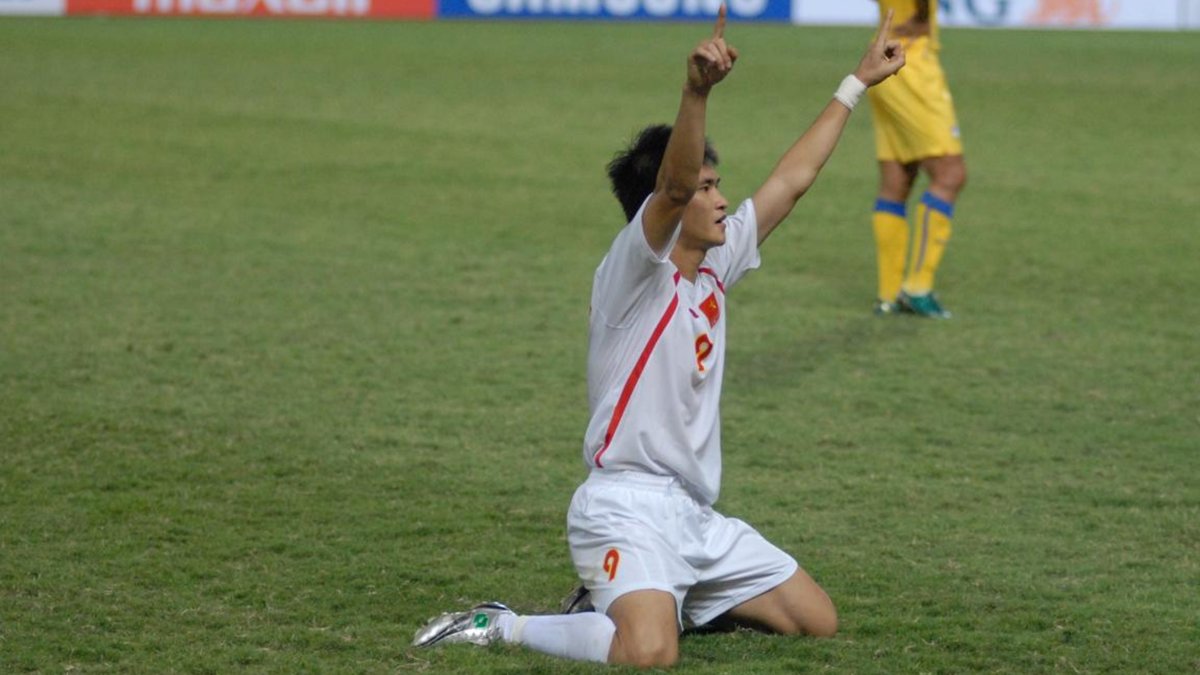
Best known for scoring a dramatic injury-time winner to guide Vietnam to their first regional title, Công Vinh admits that netting that decisive header at My Dinh Stadium against Thailand 18 years ago was a pivotal – and cathartic – moment in his life.
“In 1998, when Vietnam lost the final to Singapore, I was only 13 years old. I watched that match on TV and I cried a lot,” the former forward says of his nation’s heartbreaking 1-0 defeat against the Lions in Hanoi.
“In 2008, I was in the final against Thailand. To be honest, we were under a lot of pressure, especially playing in Thailand. The whole country was waiting for that moment.
“But in the first leg, we played very well and won 2–1 in Bangkok. In the second leg, I scored the goal at the very last minute of the match. At that moment, I couldn’t hear anything. My hands were shaking. For a few seconds, everything went black.
“After about 10 seconds, I realised what had happened. I couldn’t believe that Vietnam had won the title. It was very meaningful and unforgettable.
“Even until now, although Vietnam have won several other trophies, that one is still the best ever.”
Công Vinh was the difference between Vietnam and Thailand, runners-up in the previous tournament in 2007, across the two legs of the final having scored his side’s second goal in the 2-1 win in the first leg in Bangkok.
Four days later, however, the Sông Lam Nghệ An striker worked his magic again deep into stoppage time.
Thailand led the second leg through Teerasil Dangda’s 21st minute header and the final was poised for extra-time when Nguyễn Minh Phương bent his free kick from the left into the penalty area.
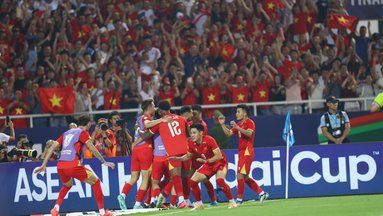
Công Vinh met the ball with a devilish flick off his forehead, the ball arcing into the sky and looping beyond the reach of goalkeeper Kosin Hathairattanakool and into the top corner, sparking scenes of delirium around the nation.
Twelve years of pain following the loss to the Singaporeans in 1998 had been finally erased, the impact on the sport in Vietnam was far-reaching.
“In Vietnam, football is truly the king of sports,” he says. “Thailand had always been a very strong opponent. Since the beginning, whenever Vietnam played against Thailand, we usually drew or lost. But in 2008, that was the turning point.
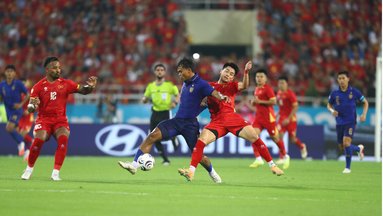
“Vietnam won the title against Thailand, and after that, Vietnam were no longer afraid of Thailand. Since 2008, we have played them many times with more confidence.
“Football is number one in Vietnam. For the fans, football is something they can live for. So defeating Thailand in the 2008 final was something truly amazing.
“It created a new history for Vietnamese football, and since then, the team has become much stronger.
“The 2008 goal is a very good memory for me. After that success, the government invested more into Vietnamese football and helped raise the level of the sport in the country.
“For me personally, it was a historic moment. In 2008, I was only 23 years old. After that, I moved to Portugal for one season, and later played in Japan for Consadole Sapporo. That success helped improve and elevate my career.”
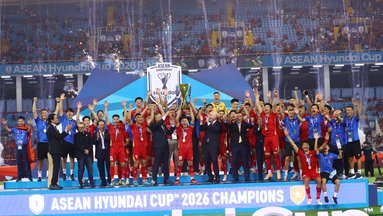
Vietnam have since gone on to win the ASEAN Championship on two more occasions, including the most recent edition in 2024, when the Golden Star Warriors once again defeated Thailand to claim the title.
That means Kim Sang-sik’s team go into the upcoming Hyundai Cup™ 2026 as defending champions, with Vietnam drawn to take on four-time winners Singapore, six-times runners-up Indonesia, Cambodia and either Timor-Leste or Brunei in Group A.
“Defending a title is always very difficult, even more difficult than winning it the first time,” says Công Vinh. “In my opinion, Vietnam’s biggest competitor now is not only Thailand, but especially Indonesia.
“If Indonesia bring all their best players, they can defeat any team in Southeast Asia, including Vietnam, Thailand or Malaysia. So, it will be a big challenge.
“However, beyond the Hyundai Cup™, I believe Vietnam and other Southeast Asian teams should aim higher, like competing strongly in the AFC competitions or even targeting the FIFA World Cup. That requires long-term investment and development.”
Share now