The draw for the 2026 ASEAN Hyundai Cup™, the 30th anniversary of the ASEAN Championship, takes place in Jakarta on Thursday to mark the start of the countdown to the latest iteration of Southeast Asia’s most keenly contested competition.
Kicking off with the playoffs in June and heating up when the Group Stage action commences in late July, the 16th edition of the event comes 30 years after Thailand lifted the inaugural title in Singapore with a solitary goal from Kiatisuk Senamuang.
Since that landmark occasion at Singapore’s National Stadium, the tournament has grown from strength to strength; records have continually been broken as the bar has been raised by an event that stands as the jewel in the crown of ASEAN football.
1996
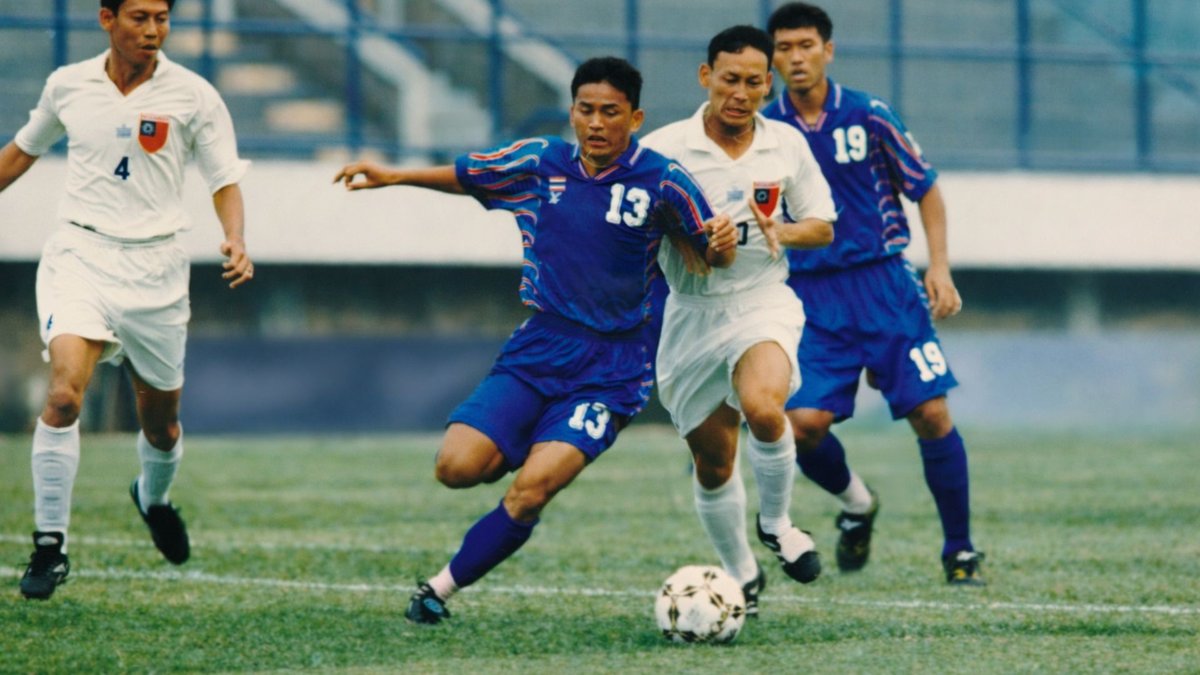
Ten nations from across Southeast Asia converged on Singapore for the inaugural ASEAN Championship. Thailand won the first-ever title with Kiatisuk Senamuang scoring from distance to defeat Malaysia 1-0 in the final and begin a dynasty that has seen the War Elephants establish themselves as the region’s leading lights.
1998
Vietnam hosted the second edition of the biennial championship with Alfred Riedl’s home team the favourites to lift the trophy. But unfancied Singapore scuppered those hopes with an unlikely run to the final in Hanoi, where defender R. Sasikumar scored the game’s only goal to claim a 1-0 win and complete a remarkable victory for the islanders. The winner is widely known as the Shoulder of God after the ball hit Sasidaran’s back and into goal following an aeriel duel with the goalkeeper.
2000
Thailand returned to the summit of ASEAN football as the Peter Withe-coached outfit hosted the competition for the first time and put on an imperious display to reclaim the trophy. Kiatisuk was again the star of the show as Thailand marched to the final, where they handed Indonesia a 4-1 defeat in Bangkok with Woorawoot Srimaka scoring a hat-trick.
2002
For the third time in four tournaments, it was Thailand who were lifting the trophy into the air at the end of another ASEAN Championship as Indonesia and Singapore co-hosted the event. The Thais needed penalties to seal victory on this occasion, however, as Dusit Chalermsan hit the winning spot kick to defeat Indonesia in the final.
2004
A format change in the fifth edition of the ASEAN Championship saw group matches played in Vietnam and Malaysia while the knockout rounds were contested on a home-and-away basis, with Singapore ultimately adding to their 1998 title win. Raddy Avramovic’s side celebrated in style in Singapore with a 2-1 win over Indonesia in the second leg of the final to complete a 5-2 aggregate win in front of their own fans.
2007
Singapore continued their commanding form from the previous edition into the sixth ASEAN Championship to become back-to-back winners of the competition, the goals of Noh Alam Shah spearheading a successful defence of the title. The striker scored the opener against Thailand in the first leg of the final as Singapore went on to record a 3-2 aggregate win.
2008
A new name was etched onto the ASEAN Championship’s Roll of Honour in 2008 as Vietnam emerged triumphant for the first time with a team led by the talents of Lê Công Vinh. The Vietnamese erased the disappointment of the 1998 defeat in dramatic style, with Công Vinh’s 94th minute goal in the second leg of the final completing a 3-2 aggregate win over Thailand.
2010
The next edition of the ASEAN Championship provided yet another first-time winner as Malaysia denied Indonesia in the final. K. Rajagopal’s team squeezed into the knockout phase before seeing off defending champions Vietnam in the semi-finals and then handing Indonesia a 4-2 aggregate defeat in the decider, with Safee Sali scoring three times to secure the title.
2012
Singapore established themselves as the most successful nation in the 16-year history of the ASEAN Championship in 2012 as Raddy Avramovic’s side once again claimed the title. Fittingly, the Lions faced three-time winners Thailand in the final and a 3-1 victory in the first leg proved decisive as Singapore held on in the return leg in Bangkok to record a 3-2 aggregate success.
2014
Powered by the creative talents of the emerging Chanathip Songkrasin, Thailand responded to their 2012 loss to reclaim the ASEAN Championship title for the first time in a decade with victory over Malaysia in the final. A 2-0 win in Bangkok in the first leg set the Thais up for a 4-3 aggregate win and a record-equalling fourth title with Chanathip’s late strike in Kuala Lumpur proving pivotal.
2016
Chanathip Songkrasin powered Thailand to a second consecutive title and a record breaking fifth ASEAN Championship as he provided the ammunition for Teerasil Dangda to earn his side victory in 2016. Indonesia reached a fifth final and took a 2-1 lead into the second leg where a brace from Siroch Chatthong earned Thailand the title and continued Indonesia’s trophy-less run.
2018
The 2018 edition brought another change of format, with the competition implementing the home-or-away format in the group phase. This edition yielded a second title for Vietnam, a decade after their first win in the competition as South Korean coach Park Hang-seo led a youthful squad to victory, emerging with a 3-2 aggregate win over Malaysia in the final.
2020
The global COVID-19 pandemic saw the tournament delayed until 2021 with all matches played in Singapore in a centralised biosecure bubble, but the situation did not prevent Thailand from adding a sixth title to their haul. Once again Chanathip Songkrasin was instrumental in his nation’s success as Thailand handed Indonesia a 6-2 aggregate loss in the final.
2022
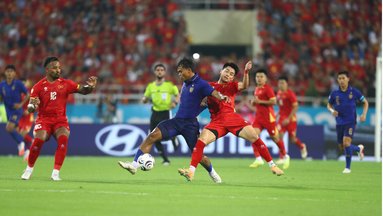
Thailand extended their record-breaking haul of ASEAN Championship titles to seven in 2022 as the tournament returned to home-or-away group phase format in the aftermath of the pandemic. Versatile midfielder Teerathon Bunmathan scored the only goal in the second leg of the final as Thailand won 1-0 in Pathum Thani to complete a 3-2 aggregate victory over Vietnam.
2024
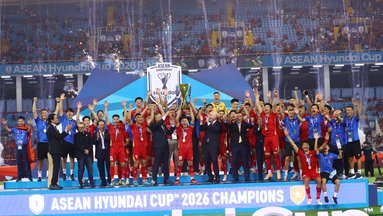
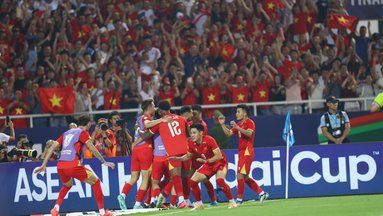
Vietnam gained revenge for their 2022 defeat to Thailand two years later as Kim Sang-sik emulated Park Hang-seo’s success as the Golden Star Warriors picked up the country’s third ASEAN Championship title. Nguyễn Xuân Son emerged as the star of the tournament, scoring seven times, while Nguyễn Hai Long’s goal deep into stoppage time confirmed Vietnam’s 3-2 second leg win and 5-3 aggregate victory.
Share now